
Sitting all day leaves most of us stiff and low on energy by mid-afternoon. Switching to a standing desk is effective, but standing still also causes problems such as foot pain, leg fatigue, and low back pain.
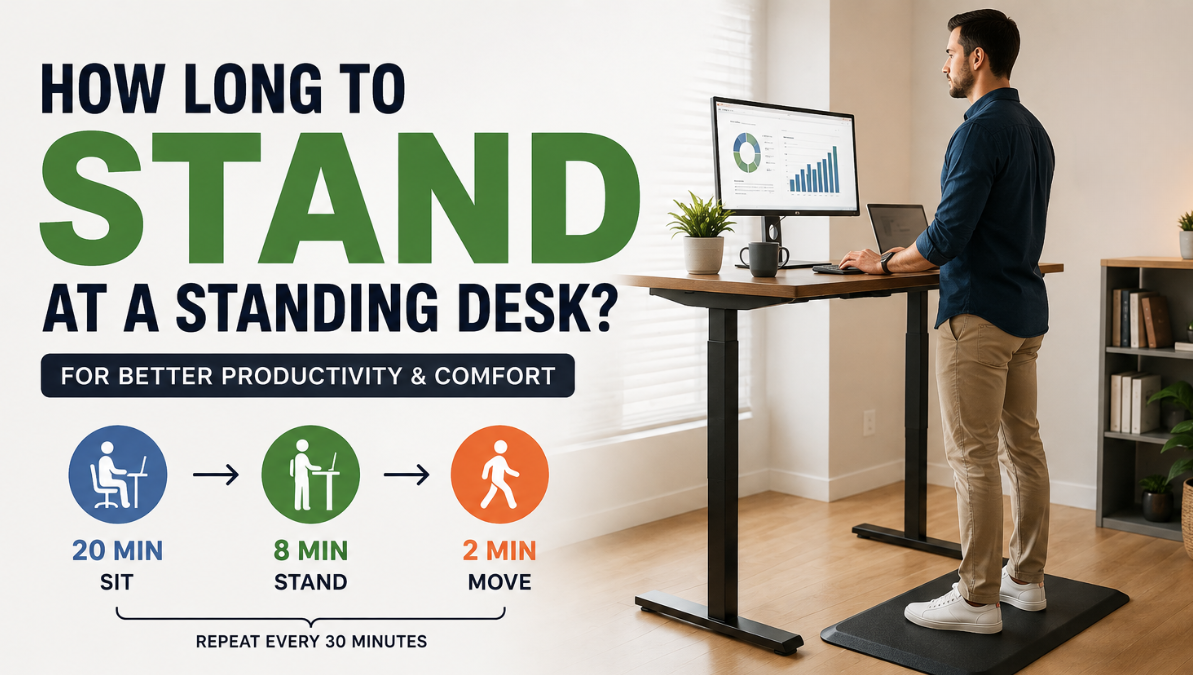
The British Journal of Sports Medicine claimed that office workers are encouraged to work up to four hours gradually, with about two hours of standing and light exercise during their working hours. Cornell University ergonomics expert Alan Hedge recommends switching at shorter intervals. This involves sitting for 20 minutes, standing for 8 minutes, and then moving your body for 2 minutes.
In this guide, I’ll show you effective ways based on real test results and key numbers to help you find a comfortable rhythm that will improve both your productivity and your physical condition.
Why Standing All Day Isn’t the Answer?
Standing all day at a standing desk may sound like a healthy solution but it is not. I learned this myself during my many years of testing desks. After standing for a long time, my feet felt heavy, the soles of my feet hurt and my hips also started to hurt.
This is also confirmed by the research results. A study from the University of Waterloo found that half of the subjects developed back pain after only standing for two hours in a row. The Canadian Center for Occupational Safety and Health (CCOHS) points out that standing for long periods of time can cause foot pain, swelling of the legs and problems with the knees, hips, and back.
The goal is not to replace one fixed posture with another. Regularly change positions so that the body does not remain in the same position for hours. That’s why many long-term standing desks don’t try to stay standing all day, but rather find a better balance by combining sitting, and standing postures.
How to Split Your Workday Between Sitting and Standing?
One of the biggest mistakes people make is to suddenly stand for a long time or hold onto the same position for hours. Your body is best kept in the right position by changing positions regularly.
The 20-8-2 rule is still practiced by many people, which was proposed by Dr. Alan Hedge of Cornell University. This involves sitting for 20 minutes, standing for eight minutes, then moving and stretching for two minutes. Repeat this every 30 minutes. On a typical 7.5-hour workday, this means you’ll spend about 5 hours sitting, 2 hours standing, and 30 minutes doing light exercise.
Let’s start slowly. Use the timer and listen to the feeling of your feet and back. This is the most effective approach I have taken in my own trial and error.
How Many Hours Should You Stand During an 8-Hour Workday?
For me, it is most effective to take 2 to 4 hours of standing time in a dispersed manner throughout the day. It is better not to stand up at once, but to divide it into small pieces.The University of Queensland offers similar advice. Start with about 2 hours, and gradually aim for a total of 4 hours in 8 hours of work.
Keep standing for a low period of time. If you stand for more than 4 hours in a row, your feet and legs may be exhausted. Start with a short period of time and gradually extend the time as your body gets used to it.
Signs You’re Standing Too Much
These are the warning signs that show up when you’ve been on your feet longer than your body likes.
Pain in Foot
Stomachaches, heel pain, or a burning sensation at the base of the foot are common. According to a study of office workers who use standing desks, many people complain of discomfort in their feet and ankles, sometimes even within the first hour. Changing position usually makes people feel better quickly.
Lower Back Discomfort
The lower back becomes dull and stiff. Studies have consistently pointed out a link between prolonged standing and increased back pain and muscle tension. If you notice something unusual, immediately lower the height of your desk and stretch.
Swelling of the Feet
In the middle of the afternoon, the ankle or foot may look swollen or feel squeezed. Poor circulation when standing can cause fluid to accumulate in the lower legs. Sit down, raise your legs higher if possible, and walk around for a few minutes.
Knee Pain
The knee may feel stiff, tender, or start to hurt, especially if it is left locked. Standing creates an extra load on the joints. Move your weight, unlock your knee, or sit down a bit to reduce the strain.
Bad Posture
They may appear hunched, put weight on one leg, or have locked their knees. Fatigue makes it difficult to maintain proper posture. In that case, consider it as a sign to change your posture and reset.
Tips For Keeping Your Standing Desk Comfortable
I have tried many tips to stay healthy, these simple adjustments can make a big difference to the fatigue you feel at the end of the day.
Fit the desk to the level of the elbow
Adjust the height of the desk so that the elbow bends to about 90 degrees and the forearm is parallel to the floor. Both the OSHA (U.S. Occupational Safety and Health Administration) and the Mayo Clinic recommend this neutral stance to relax the shoulders and keep the wrist straight.
Adjust the monitor to your eye level
The top edge of the screen should be at eye level or slightly below, about the length of your extended arms. This will prevent the head from tilting up and down, reducing the burden on the neck.
Wear Shoes that hold feet firmly
Avoid flat socks and worn shoes. Shoes that firmly support the feet will reduce the fatigue of the feet and legs during standing work.
Use of Fatigue-Reducing Mats
The cushioned fatigue-reducing mat promotes fine movements and reduces strain on the feet and hips. When standing for a long time, its use is recommended by many ergonomic guidelines.
Shift One’s Weight Frequently
Do not keep your knees tight or stand still. Transfer weight from one foot to the other, or sometimes put one foot on a low footrest.
Walk for a Few Minutes an Hour
Just a little walk in the corridors or even walk around the room will improve blood circulation and reset posture. Regular physical activity is more important than a perfect standing posture.
So, How Long to Stand?
After spending many years around the standing desks, I learned that the real benefit is not to stand as long as possible but to find a rhythm that suits your body. For 2 to 4 hours throughout the day, spread out your standing tasks, change your posture regularly, and pay attention when your feet, legs, and back start to complain of discomfort.
Both the 20-8-2 approach proposed by Cornell University and the simple 30-minute sit-and-stand cycle can be effective if used as a habit. When combined with proper desk height, well-fitting shoes, and a short walk, you’ll find that your energy lasts into the afternoon, reducing stiffness in your body.
Start slowly, listen to early warning signs and adjust as needed. A standing desk is a tool, not a panacea. The right way to use it will help you work more comfortably and productively without switching one problem to another.

Aamir Riaz is the founder and owner of Bashufy. After years of working with uncomfortable desks and learning the importance of better posture, he shares honest standing desk reviews, buying guides, and ergonomic tips based on research and real user experiences to help readers make better choices for their home office setup.