
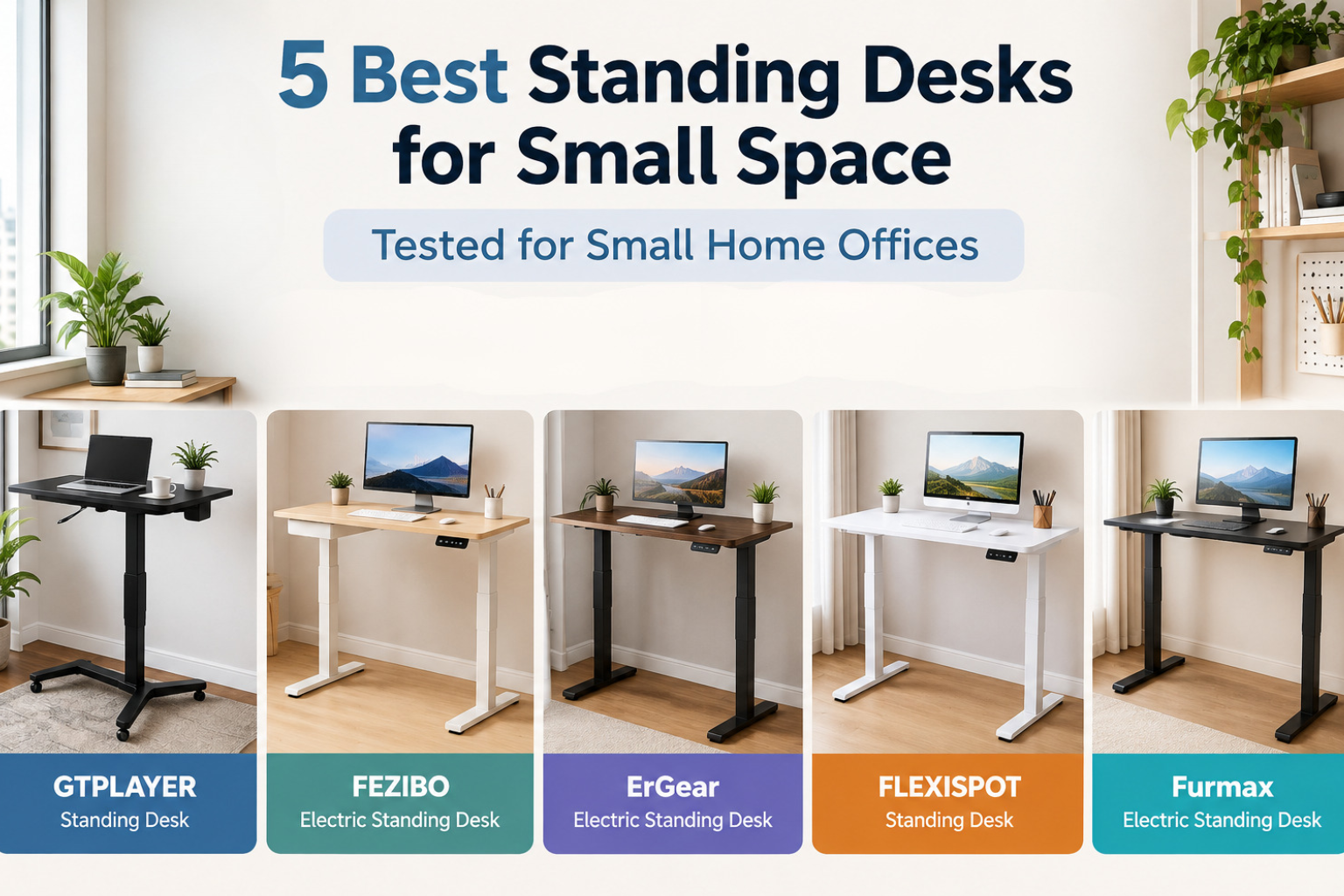
If you’ve ever tried to place a standing desk in a narrow bedroom, studio apartment, or student dorm room, you already know that the problem is not finding the standing desk itself, but finding something that doesn’t put pressure on the entire room. Most standing desk comparison articles are written for people who can afford the corner of the home office. However, this is not the case for many readers.
From my experience of actually testing and comparing desks for small spaces, what really matters here is how much effective work space you have for your desk footprint, and how much of that space you have. The height adjustment range is suitable for both sitting and standing, and the stability when the desk is raised to the maximum height. In a small room, a rocking desk is a much bigger problem because you’re originally going to sit closer to your desk. Here are five compact standing desks that I have listed as a contender, followed by an explanation of which one should actually be chosen for your specific space.
Why You’d Want a Standing Desk in a Small Space
It may seem counterintuitive to have a height-adjustable desk in a room that already has limited space, but in my experience, a smaller room is often the one that benefits the most. If you only have one desk with a fixed height in a small bedroom or student dormitory, you will be forced to stay in the same position throughout the day. In a room where you can’t afford to stand up and move around in the first place, the burden accumulates quickly.
This is not just a marketing slogan; it is based on solid scientific evidence. The NIOSH directly recommends sit-stand workstations as part of its Total Worker Health program, especially as a way to reduce sedentary work hours. This is an important difference from most of the “standing desks” hype you’ll find online. Because it is not a furniture brand, but a recommendation from the occupational health agency.
There are also size limitations in small spaces that are often overlooked. It’s about how much floor space the desk itself requires when actually using it. The ADA Accessible Design Standard, which is administered by the U.S. Accessibility Commission, defines 30 inches × 48 inches as the minimum floor space required for people to approach and use workstations. While this number is intended to comply with accessibility standards, and not specifically set for smaller apartments, it is a really useful guide when deciding how much free space should be around a compact desk. If you can’t secure a space close to this number in front of your desk, the room will feel cramped no matter how small the desk itself is.
In short, this is exactly the case with standing desks for narrow spaces. If you plan on getting a little more space around your desk, you can spread out your sitting time without having to have a large room. If you want to learn more about the health benefits of alternating between sitting and standing throughout the day, read my article on how long to stand at the standing desk.
My 5 Best Standing Desks for Small Spaces
1. Best Overall: FEZIBO Electric Standing Desk
In my experience, FEZIBO’s electric standing desk is the most balanced option on this list. The electric lift function allows for consistent and accurate height adjustment without the need for manual crank rotation. If you change your posture several times a day, this is more important than many people think.
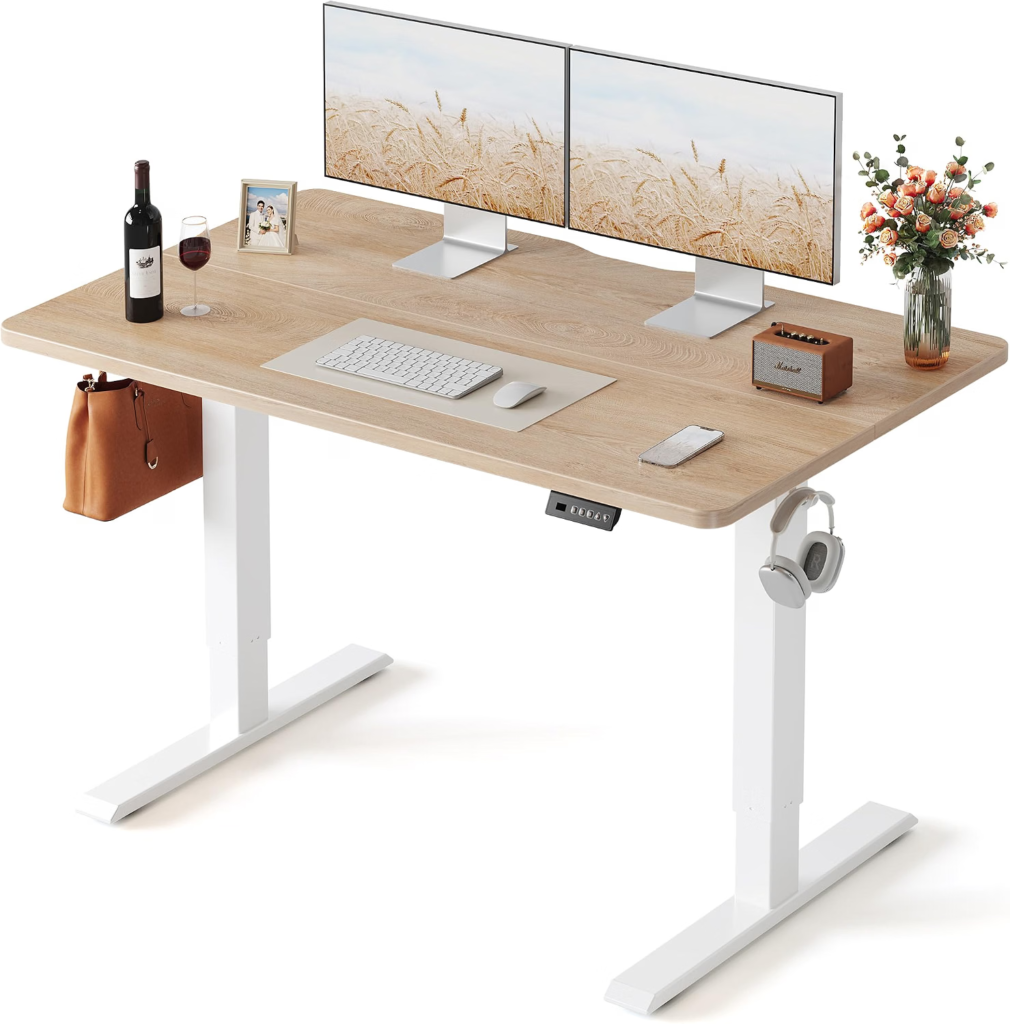
Most of the company’s compact models have enough desktop space to accommodate monitors and keyboards, or even laptops with stands, without the need for a large footprint. The maximum height of this size class desk is also excellent. It’s not recommended to install heavy dual monitor arms, but it’s solid and stable if you’re setting up a single monitor or laptop.
Recommended for: Those who want the convenience of electric adjustment in their home office but can not afford space.
2. Best for a Compact Flexible Setup: GTPLAYER Standing Desk
GTPLAYER’s compact standing desks are designed to have a smaller footprint than a typical sitting desk, which is exactly why it deserves attention here. The height adjustment of these models is typically operated by either a crank or pneumatic lift or a lever spring mechanism depending on the version, so it is recommended to check the specific product type you are buying on the product page. When you actually operate it, the adjustment method of both is very different.
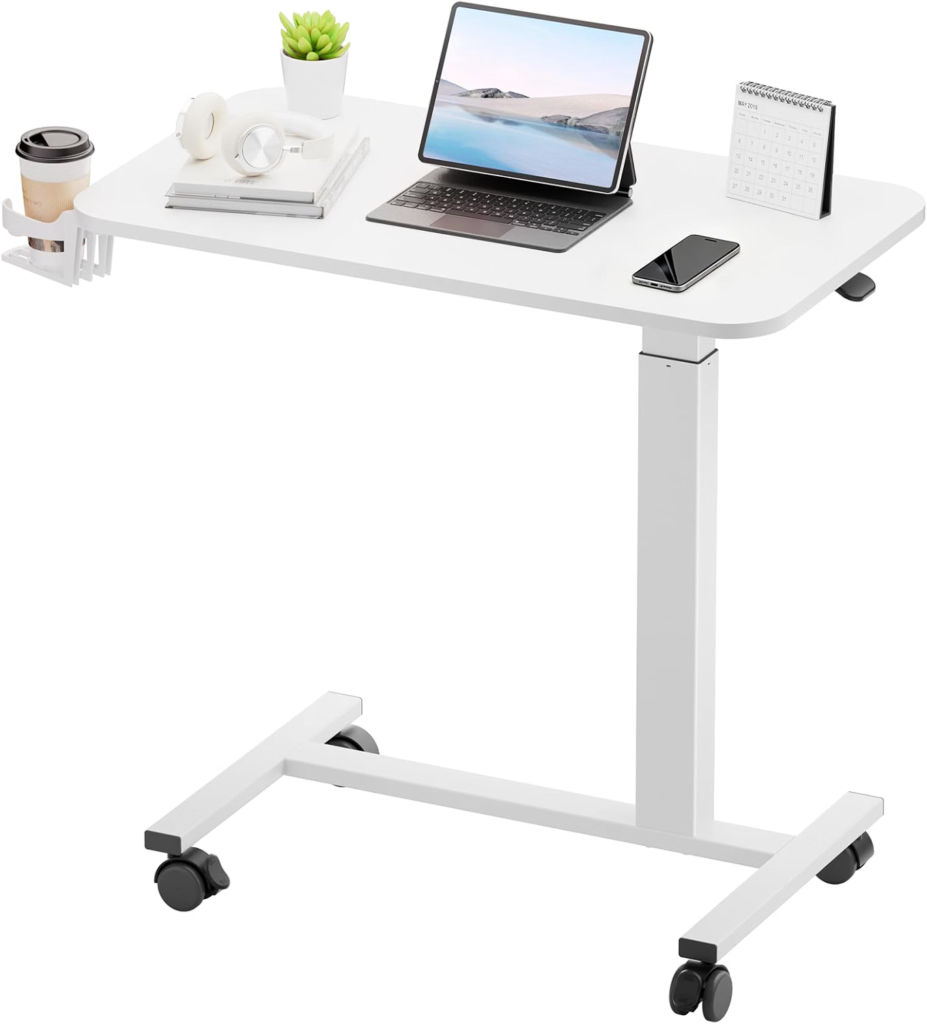
Although the space for the top plate is small, this is a trade-off for achieving a compact frame. It’s big enough to fit a laptop or a small monitor, but it’s hard to put monitors, laptops, and a full-size keyboard and mouse tray all in one comfortable place.
Recommended for: Those who are looking for a flexible and mobile desk instead of student dormitories, small bedrooms, or fixed desks.
Limitations: If you use more than two displays, your desktop space will quickly become cramped.
3. Best Value for a Small Office: ErGear Electric Standing Desk
ErGear’s electric desks have a lower price range compared to FEZIBO and FLEXISPOT, they have a height adjustment function by electric, so they are more cost-effective than just low-priced products. The compact size of the desktop space is equivalent to FEZIBO, and the height adjustment range covers from sitting to standing use for most adult height.
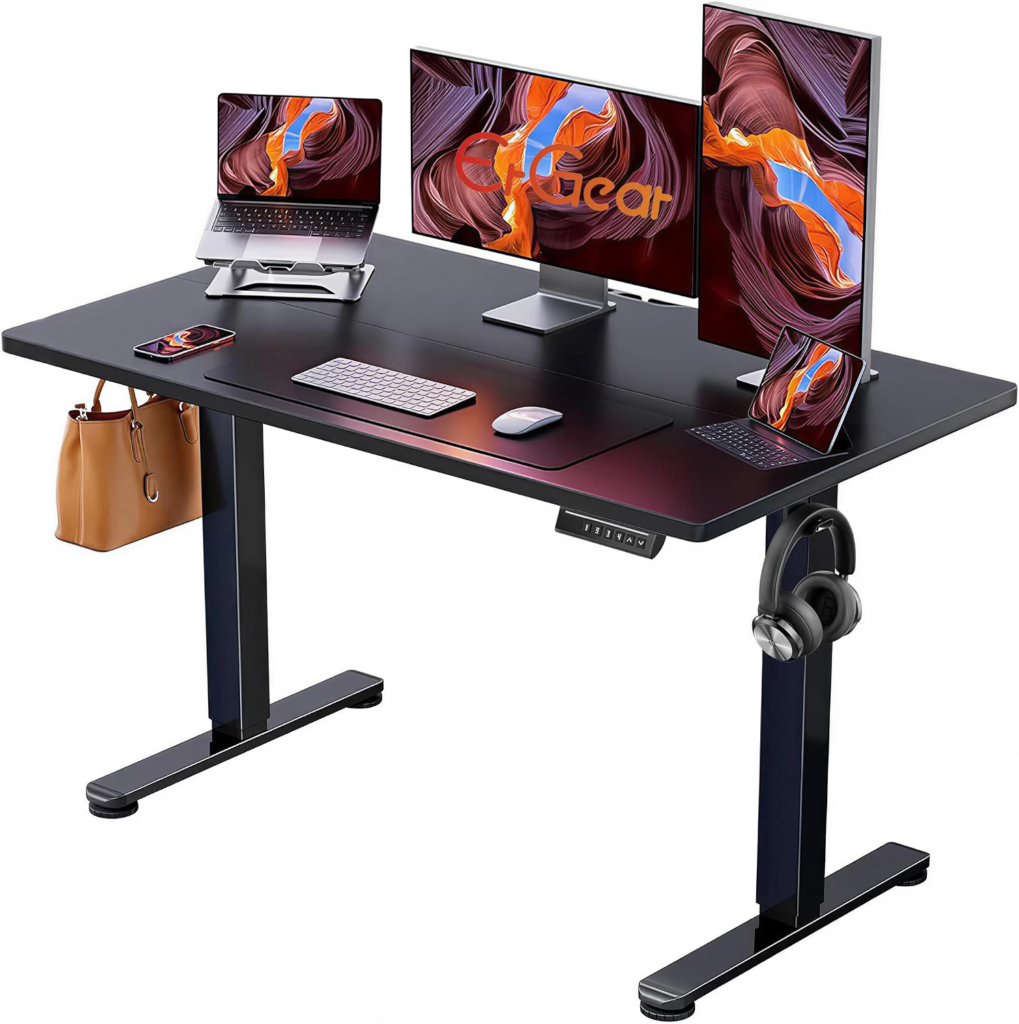
A slight disadvantage compared to expensive models is the stability at the top of the height range. It is fine for typing and light use, but you need to be more careful when using heavy monitor setups compared to FEZIBO.
Recommended for: Small office and home office environments with limited budgets but who want an electric adjustment rather than a manual crank.
Comparison point: The desktop area is narrower than FEZIBO, and the stability at the highest position is slightly lower, but the price is clearly lower, while having a similar set of key features.
4. Best Compact Workspace: FLEXISPOT Whole-Piece Standing Desk
FLEXISPOT’s standing desk “integrated desktop” design is the most important feature of this product. Instead of framing a separate desktop panel, some of the company’s compact models are shipped as simple units that integrate the desktop and frame, making setup simple. This integrated design tends to slightly increase the rigidity of the desktop under load, which is more important when you actually type on it every day than just looking at the spec sheet.
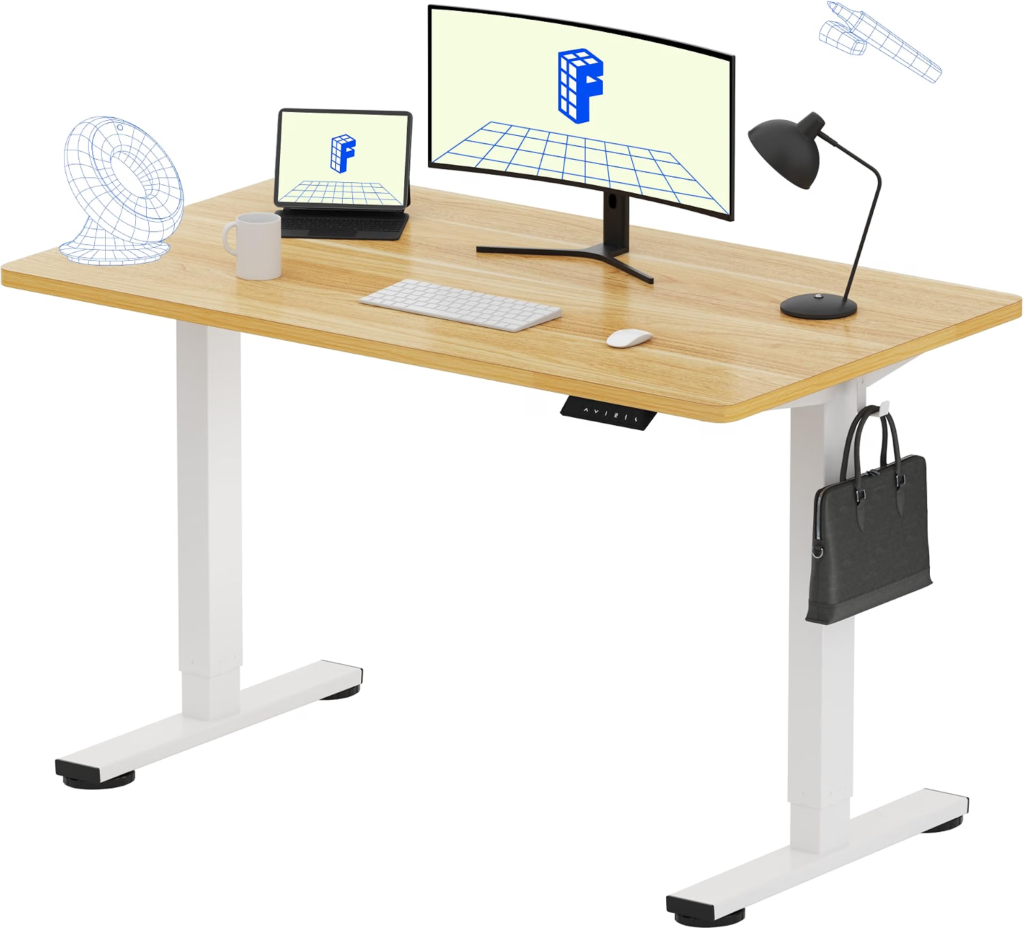
The large work space of the compact FLEXISPOT model is a real advantage. Among the desks on this list, I would usually recommend this model if you are looking for desktop space as a top priority and are willing to sacrifice some floor space savings to do so.
Recommended for: Small offices that want a practical, easy-to-use desktop surface rather than a minimal footprint.
People to consider: People who felt that their GTPLAYER or ErGear desktop was too narrow, but still did not have space to place a full-size desk.
5. Best Budget-Friendly Option: Furmax Electric Standing Desk
The Furmax is often cited as the most affordable electric desk in this category, but in my experience, this is a reasonable trade-off rather than a cause for concern. This is because it is less expensive than other electric desks and offers a motorized height adjustment function and a compact footprint. The trade-off is mainly manifested in the quality of the finish and the stability of the tabletop, rather than in the core lifting mechanism.
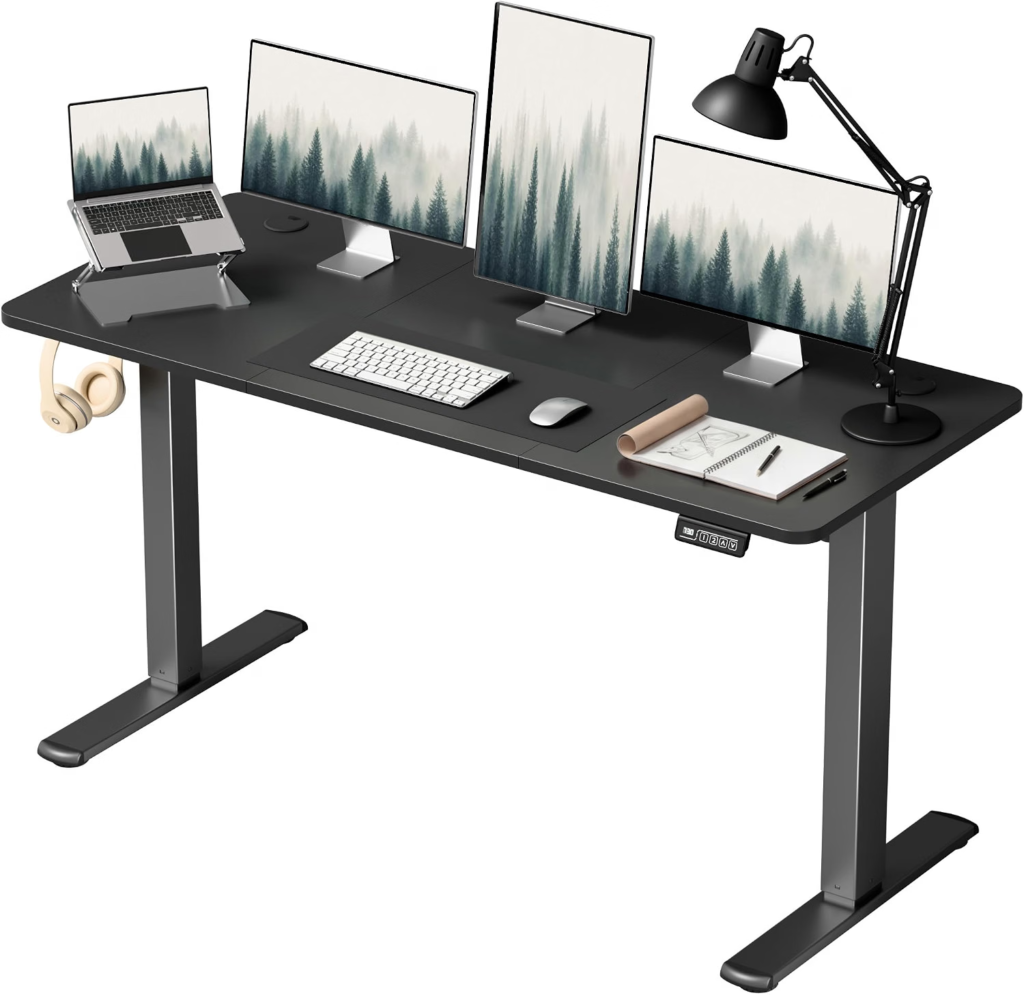
Recommended for: If you are in a budget-constrained room and don’t plan to put heavy monitor arms or accessories on your desk.
Best Use Case: Set up for beginners — as your first standing desk for a dormitory room or a sub-desk in a small space.
How I Choose a Standing Desk for a Small Space
First, Measure the Width
It may sound obvious, but not many people skip this step. Measure the actual wall and corner space to make sure there is enough space around your desk. You need space to pull out your chairs, walk around your desk, and avoid hitting your hips in the corners every time you pass by.
Don’t Forget the Depth of the Desk
The width is the only thing that tends to attract attention, but when choosing a desk in a small space, the depth tends to be a trap. Even if it looks narrow in the picture, considering how far it protrudes from the wall, it may occupy more floor space than expected. In particular, care should be taken in bedrooms, where the desk is often located right next to the bed or dresser.
Check the Height Adjustment Range
Make sure that the height adjustment range of the desk is compatible with both sitting and standing positions, or not just one or the other. This is worth checking in the same way as checking the adjustment range of the keyboard tray. Instead of just accepting the specifications, let’s extend it to both ends and check whether it fits in a position that is easy to work with. This is explained in more detail in my Keyboard Tray Guide, including the height range of the keyboard arrangement as defined by the Occupational Safety and Health Administration.
Consider the Monitor Installation Status
This will change the definition of sufficient desktop space:
Laptops only — A compact desk of the smallest size is enough
One Monitor — You’d better have a bit more desktop depth, especially if you don’t use a monitor arm
Two monitors — In this case, we recommend choosing FLEXISPOT or FEZIBO over the smallest footprint models
Monitor Arm vs Monitor Stand — The monitor arm clamps to the edge of the desk to free up desktop space. This is a much more important point when installing in a smaller space than in a larger space.
Confirm Stability
Check if your desk is actually stable when you lift it to its maximum height. Cheap compact desks tend to show their limitations in this regard. The weight of the monitor, monitor arm, and accessories should also be taken into account, as they may be stable when empty, but may change behavior under load.
My Tips for Making a Small Standing Desk Setup Work
- Use the monitor arm instead of the monitor stand to add depth to your desktop
- Choose a compact keyboard and mouse. A smaller keyboard can actually free up desktop space
- Don’t stack the cables on your desk, just pass them under your desk
- Avoid peripherals that are too large for the actual desk footprint
- Make sure to leave some space just behind your desk so you don’t bump into them when you stand up
- Instead of stacking things on your desktop, add small storage boxes or drawers under your desk as needed.
Final Thoughts
The smallest desk on the market isn’t necessarily the best desk for your space. A desk that is too small for the monitor installation environment will only create new problems rather than solve the original problem. First of all, measure the actual space, understand the actual space required to install the monitor, and then compare it with the above five options. If you are looking for the most safe and versatile options, I recommend you to consider FEZIBO. Consider FLEXISPOT if you value desk space more than floor space, or Furmax if your budget is the deciding factor.

Aamir Riaz is the founder and owner of Bashufy. After years of working with uncomfortable desks and learning the importance of better posture, he shares honest standing desk reviews, buying guides, and ergonomic tips based on research and real user experiences to help readers make better choices for their home office setup.