
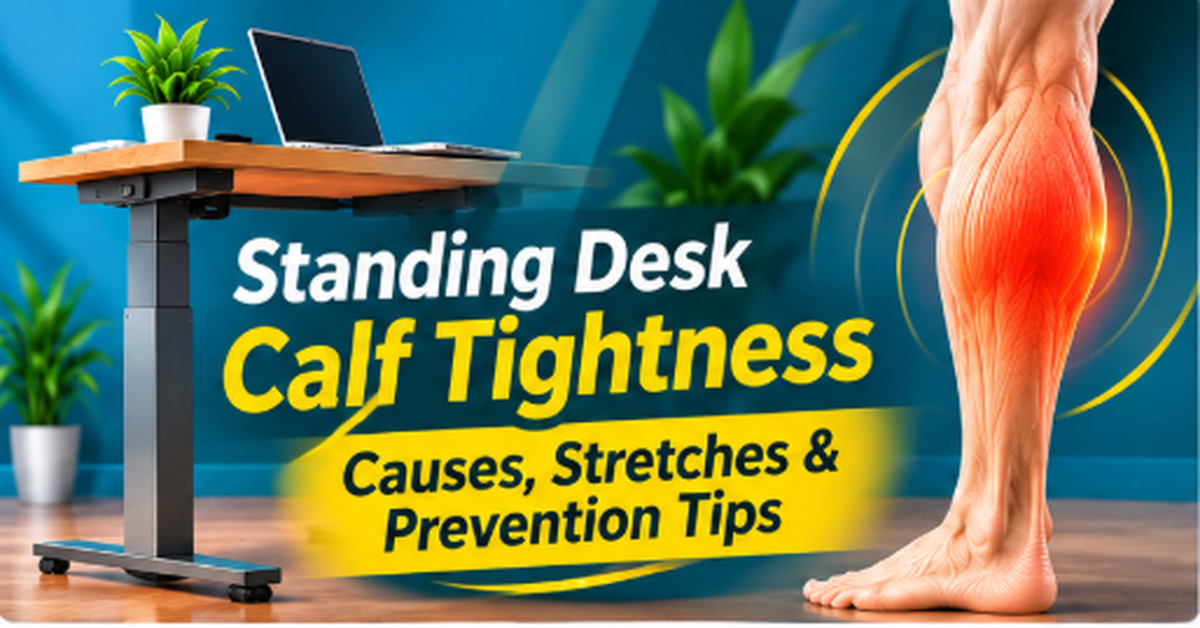
Have you ever felt a stretch or discomfort on your calves right after you raised the height of your standing desk? People may expect to be more active when working on their feet, but standing for long periods of time can make the lower legs stiff, tired, and painful. Standing in the same position for a long time puts a load on the lower leg that almost does not occur when the person is sitting, and the tension and discomfort often appear in the gastrocnemius and flatulence muscles. The standing desk itself isn’t the cause of all the problems with the calf. Many people have been standing for years without problems, but certain habits can increase that burden.
In this article, I’ll cover some of the common causes I’ve seen so far, some simple stretches I can incorporate into my work, some practical ways to adjust my desk, and warning signs that simply setting up the environment isn’t enough to tell me when it’s time to speak to a doctor.
Why Your Calves Feel Tight After Standing at a Desk
In my experience, calf pain is most severe when the lower leg remains in place for a long time. When both feet are firmly seated on the ground, the muscles that normally pump blood back to the heart are less likely to function adequately.
Staying in One Position for Too Long on Standing Desk
When standing still, the calf muscles are continuously placed in a state of mild tension. Over time, fatigue builds up, and the legs feel stiff or heavy. The Occupational Safety and Health Administration (OSHA) points out that standing in the same position causes muscle fatigue and blood retention in the legs. Moving around in the workplace—even with small strides or weight movements—provides a muscular rest that cannot be obtained by merely remaining completely still.
Repeated Weight Shifting and Poor Standing Habits
I’ve seen many people put their weight on one leg for long periods of time, or straighten their knees and tighten them. Such uneven loads and rigid postures limit ankle movement and continue to strain the calves more than necessary. EU-OSHA research on how to stand still for a long time shows that postural limitations lead to lower extremity discomfort and fatigue. It is more important to regularly change your posture than to find one “perfect” way of standing and keep it all day.
5 Common Standing Desk Habits That May Contribute to Calf Tightness
- Standing all the time without sitting or moving. Standing still for long periods of time can reduce the natural muscular pumping action of the calves, leading to lower-extremity fatigue similar to what OSHA says in its work guidelines.
- Keep the knee locked for a long time. When the knee is locked, the joints and surrounding tissues are overloaded instead of the muscles.
- To wear uncomfortable shoes with insufficient cushioning properties. Thin or worn shoes increase the impact on hard surfaces and place an excessive strain on the calves to maintain balance.
- Stand on a hard floor surface with no proper support. The concrete or bare hard floor surface transmits the force to the legs straight. OSHA cites fatigue-relieving mats and cushioned shoes as practical solutions to reduce the burden on the lower limbs.
- Taking a standing position that feels uncomfortable or forces you to distribute weight unnaturally. When people are placed in positions that are unnatural, such as when the desk is high or when the feet are placed, the calf continues to be overloaded.
These habits often appear together with broader standing desk fatigue and sometimes standing desk knee pain.
4 Gentle Calf Stretches to Try During Your Workday
These are general exercise tips based on practical sources, such as the Mayo Clinic’s guidance on calf stretching. These are not personalized treatments. If you have any injuries or persistent pain, you should first consult a medical professional.
1. Wall Calf Stretch With a Straight Knee
Stand against the wall and place your hands on the wall about shoulder level. With one foot stepping backward and the back heel on the floor, the person stretches the knee and tilts forward until the calf upper part (gastrocnemius) feels a stretch. Hold the position for 20 to 30 seconds and do the same on the other foot. Stretch within a reasonable range.
2. Stretch the calf with the knee bent
Stand up against the same wall. Now, with the heels on the floor, bend the knees in the back a little. This causes the stretch to move to the lower part of the calf (called the soleus muscle). Keep that posture for a while, then switch to the opposite foot. Many people feel the stretch more strongly when they are standing and their calves are already stiff.
3. Exercise the Ankle in a Sitting Position
Sit with both feet on the ground. Slowly stretch the toes away from the person, then pull them back toward the shin. Do not push it, move it within a comfortable range. It is a range-of-motion exercise rather than a deep stretch and is a good way to work between tasks.
4. Raising and lowering with a gentle heel
Hold on to the edge of the desk or any other stable place. Stand on the toes of both feet, leave a little time, and then slowly put down. Repeat several times at a slow pace. Stop if you feel sharp pain.
I feel that it is more useful to do these movements for a short time at a time in everyday office work than to do a long stretch session that interrupts the flow of work.
How to Adjust Your Standing Desk to Reduce Calf Discomfort
Your Time Between Sitting, Standing & Walking
A standing desk is a choice, not a compulsion to stand all day. From the results of research and actual experience, it is known that repeating short standing work while sitting and taking short walks reduces the burden on the lower limbs than standing still for a long time.I cover practical duration ranges in more detail in how long to stand at a standing desk.
Check Your Shoes and Standing Surface
Wearing shoes that are cushioned and support your feet well makes a clear difference. A fatigue mat can help on hard floors, but avoid those that are too thick or too soft and feel unstable. The Occupational Safety and Health Administration (OSHA) lists cushioning shoes and mats as useful tools when the mat is practical.
Make Room for Natural Movement
Make sure there is enough room under and around your desk so that you don’t have to rearrange your furniture every time you move your weight, step halfway, sit or stand. A comfortable standing desk setup supports movement rather than locking you into one rigid spot.
When Calf Tightness May Be More Than Desk Discomfort
The tightness and stiffness of the calves are not always ergonomic. Muscle strain, inflammation of the Achilles tendon, and other medical causes can cause similar sensations. Symptoms that appear suddenly or for unknown reasons are cause for concern.
Warning Signs of Calf Tightness When You Should Not Ignore
- Swelling of the calf on one side
- Warmth, redness, or abnormal skin color changes
- a marked or worsening calf pain
- Difficulty walking or putting weight on their legs
According to the NHS, symptoms such as throbbing pain and swelling in one leg may suggest deep vein thrombosis (DVT). In addition to the symptoms of blood clots in the legs, sudden shortness of breath and chest pain may indicate the need for emergency medical attention.
A Simple Daily Routine for More Comfortable Standing
| Workday habit | Practical action |
| Starting work | Check footwear and desk position |
| During standing | Change stance and move naturally |
| Between tasks | Walk briefly or sit |
| When calves feel tight | Stop prolonged standing and reassess comfort |
| Ending work | Notice whether discomfort improves with rest |
This is a flexible habit list, not a fixed medical schedule. Adjust it to what your body tolerates on any given day.
Final Thoughts on Standing Desk Calf Tightness
The biggest lesson I’ve learned from years of experimenting and reviewing the setup of a standing desk is that it’s more important than any single accessory to move your body, wear comfortable shoes, and regularly change your posture. A standing desk should provide flexibility rather than encourage you to stay standing all the time. If stiffness continues, if symptoms are severe, or if the above warning signs are present, you should see a specialist. By making adjustments little by little but continuously, normal standing work becomes much more comfortable.

Aamir Riaz is the founder and owner of Bashufy. After years of working with uncomfortable desks and learning the importance of better posture, he shares honest standing desk reviews, buying guides, and ergonomic tips based on research and real user experiences to help readers make better choices for their home office setup.